
Inbound vs. Outbound SMS: Key Differences
SMS marketing is a powerful tool for businesses looking to engage customers directly. However, not all SMS campaigns are the same. They are typically categorized into inbound and outbound SMS campaigns, each serving different marketing goals and communication strategies.
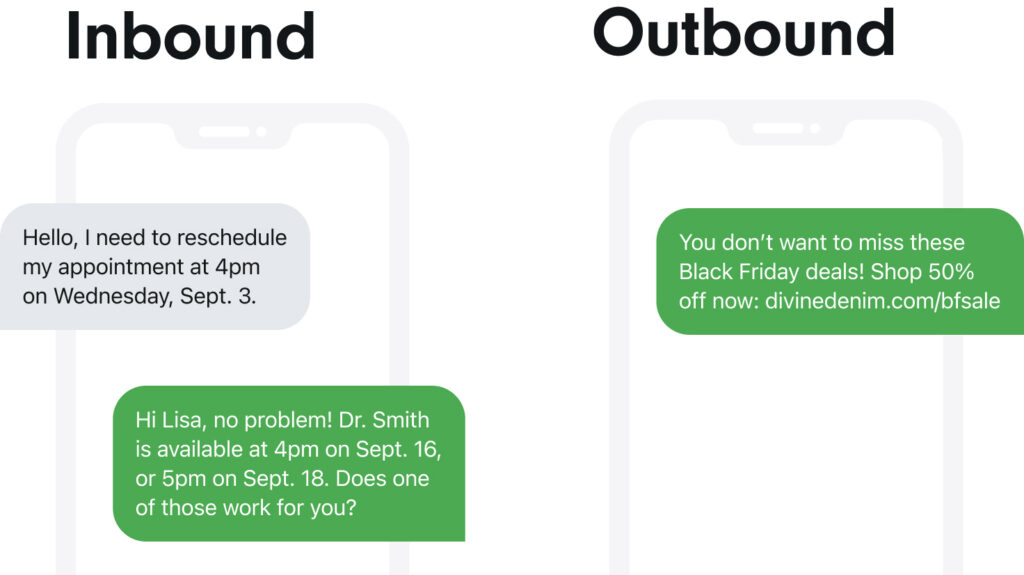
- Inbound SMS Campaigns: These rely on customers initiating the conversation. Businesses set up a dedicated number or keyword that users can text to receive promotions, support, or information. Common examples include SMS opt-ins, customer service interactions, and feedback surveys.
- Outbound SMS Campaigns: These involve businesses sending messages to customers first, often in bulk. These campaigns can be promotional, transactional, or informational. Examples include appointment reminders, flash sale notifications, and personalized offers.
What Works for You: Inbound or Outbound SMS?
Choosing between inbound and outbound SMS campaigns depends on your business objectives and customer engagement strategies.
When to Use Inbound SMS Campaigns:
- Lead Generation & Customer Engagement: Inbound SMS campaigns work best when you want customers to take the first step, such as signing up for promotions or engaging with interactive content.
- Customer Support & Feedback: Companies use inbound SMS for customer service, allowing users to seek assistance via text rather than calling.
- Opt-In Marketing: Businesses can use inbound SMS to build a database of engaged customers who willingly subscribe to receive messages.
When to Use Outbound SMS Campaigns:
- Promotional Campaigns: If you need to push out special offers, flash sales, or new product announcements, outbound SMS is ideal.
- Automated Notifications & Reminders: Businesses use outbound SMS to send appointment reminders, billing notifications, and order confirmations.
- Re-Engagement & Customer Retention: Outbound messages help businesses reconnect with inactive customers, encourage repeat purchases, or offer loyalty rewards.
How to Set Up Inbound and Outbound SMS Campaigns
Setting Up an Inbound SMS Campaign:
- Choose a Short Code or Long Code: Short codes are great for high-volume campaigns, while long codes are better for two-way communication.
- Create a Keyword: This is what customers will text to opt-in. For example, “Text ‘OFFER’ to 12345 to get 20% off.”
- Set Up Auto-Responses: Automated replies confirm subscriptions and provide additional information.
- Promote Your Campaign: Use social media, email marketing, and in-store signage to spread the word.
- Monitor and Optimize: Analyze response rates and refine your strategy based on customer behavior.
Setting Up an Outbound SMS Campaign:
- Build a Compliant Subscriber List: Ensure all recipients have opted in to receive messages.
- Segment Your Audience: Send personalized messages based on customer behavior, location, or purchase history.
- Craft a Compelling Message: Keep it short, clear, and action-driven. For example, “Flash Sale! 30% off all items today only. Shop now: [link].”
- Schedule Messages for Maximum Impact: Consider the best times to send SMS based on customer habits.
- Track Performance and Adjust: Measure open rates, click-through rates, and conversions to optimize future campaigns.
Conclusion
Both inbound and outbound SMS campaigns have their place in a comprehensive marketing strategy. If your goal is to create engagement and build a loyal audience, inbound SMS is a strong option. If you need to deliver timely promotions, reminders, and updates, outbound SMS is the way to go. Many businesses find success in combining both approaches to maximize their SMS marketing effectiveness.
By implementing best practices and continuously refining your campaigns, you can leverage SMS as a powerful tool to enhance customer communication and drive conversions.
